Strongly recommended — Ian Toll’s Pacific Crucible


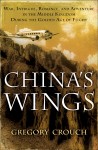
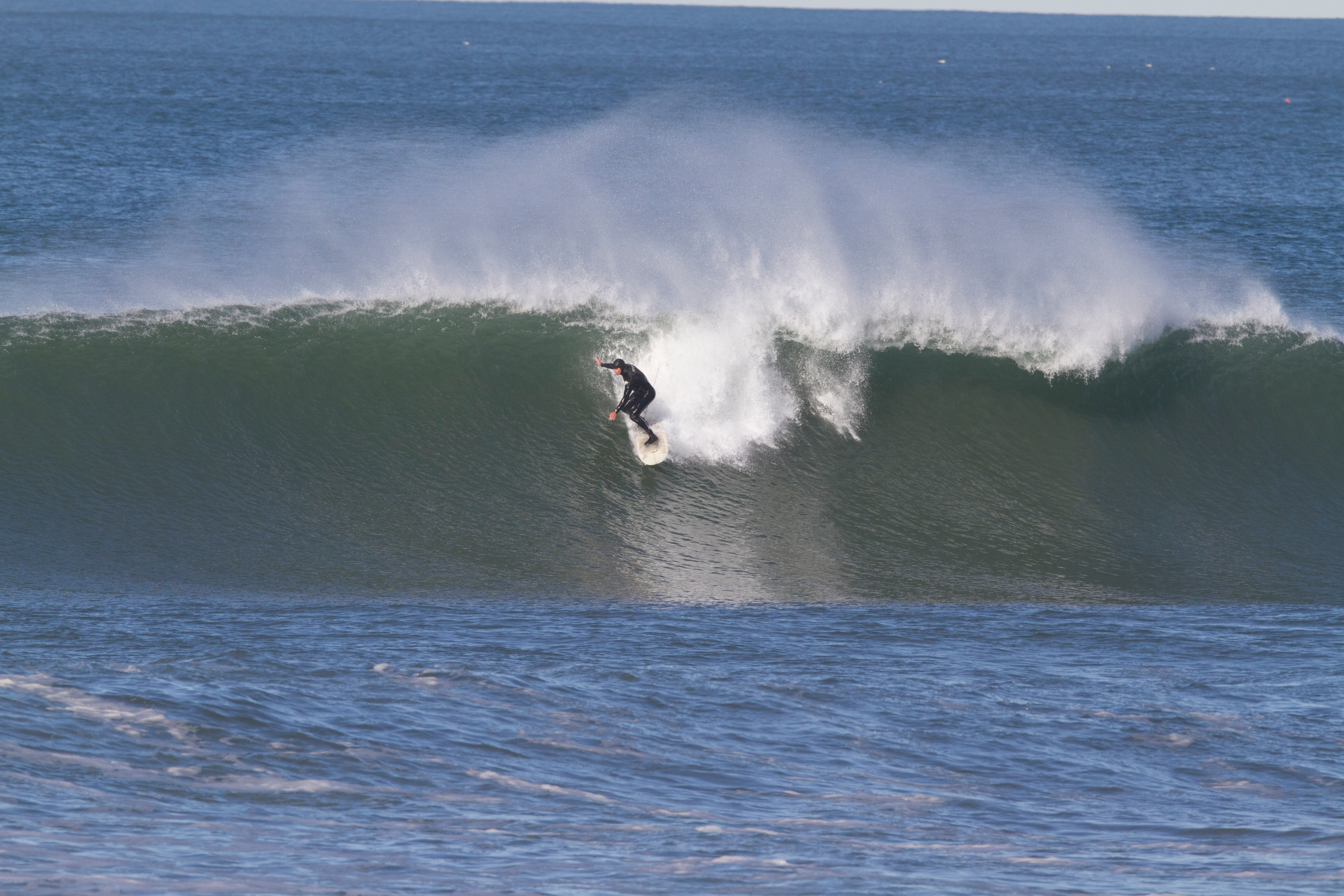
Now that I’ve survived the Christmas swivet and am buckling down to ramp up for China’s Wings’ publication (so much so that I’m probably going to curtail my surfing despite the ongoing run of excellence at Ocean Beach), I want to circle back to a book I mentioned in one of my pre-Christmas posts — Ian Toll’s book Pacific Crucible: War at Sea in the Pacific, 1941-1942. I finished it just before Christmas, and I strongly recommend it to anyone interested in reading a breezy, informative, well-researched narrative of the opening months of World War II in the Pacific.

In my mind, “narrative” is best way to read and appreciate history — the best history books always read as stories.

In Pacific Crucible, Toll tells the story of the first six months of the Pacific War, taking us from the attack on Pearl Harbor to the climactic Battle of Midway in the first week of June, 1942, albeit also including some significant circles back through time to fill in the back stories of the significant characters and nations, and their respective navies. Isoroku Yamamato, commander-in-chief of the Japanese Combined Fleet, is perhaps the best drawn and best developed of Toll’s characters, which is fitting, since his decisions — and blunders, particularly at Midway — did much to shape the first six months of the war.

Through the years, I’ve read many accounts of Pearl Harbor, the Battle of the Coral Sea, and the Battle of Midway, and Toll does an excellent job leading us through those engagements, giving proper prominence to recent research into those battles and doing an excellent job describing the efforts of US Navy codebreakers and the crucial role they played. I knew much less about  American carrier operations between Pearl Harbor and the Doolittle Raid, and thanks to Toll’s telling, I’m glad to now be able to fit them into the overall picture.

Toll describes the Doolittle Raid in detail, and therein lies a connection to China’s Wings, because William Bond, Harold Bixby, Pan American, and CNAC played a small part in the Doolittle Raid.

In mid-March, an Air Corps officer approached Bixby in New York, at the Pan Am headquarters in the Chrysler Building, and asked a slate of technical questions about flying conditions in Eastern China. Bixby gave what specifics he could, but said that for precise, accurate, and current information, the Army should query “Our man Bond,” who’d recently returned to Washington from China.

The officer took Bixby’s suggestion. He was evasive, but he told Bond the Army planned to bomb Tokyo between April 10 and April 20 and wanted to land in China afterward. Based on landing weight parameters, Bond surmised the Army was planning to use medium bombers, and he disabused the officer of hope there was a suitable spot north of the Yangtze. But CNAC’s airfield at Namyung was just barely within the radius the officer indicated. It was fifty miles from the nearest Japanese garrison and wasn’t difficult for skilled navigators to find in daylight. Bond told the man everything he knew. He never heard from the officer again, but extrapolating from what he’d been told and knowing the Air Corps didn’t have any medium bombers in China, the realization grew on him that the military must have figured out how to launch them from aircraft carriers, after which they’d raid Japan and carry on to China. Considering the value of the assets the Japanese could annihilate if the operation were compromised, Bond was amazed the officer hadn’t extracted a formal secrecy pledge – concrete proof he was trusted as much in Washington as he was in China.[i]

Moon Chin flew Doolittle out of China after the raid, and it’s one of the more amusing anecdotes in China’s Wings.

As an addendum, those fascinated with the Battle of Midway will spend happy hours perusing the wealth of information posted at the Battle of Midway Roundtable — it’s a fabulous website, and I could not more strongly recommend Jonathan Parshall’s and Anthony Tully’s Shattered Sword: The Untold Story of the Battle of Midway, which tells the battle from the Japanese perspective. It’s one of the best battle narratives I’ve ever read, and I’ve read many dozens.

[i] Bond’s contribution to the Doolittle Raid: William Langhorne Bond, Wings for an Embattled China, pp. 347-348.

Share

The White Countess, my favorite Shanghai movie


I examined a lot of photos and watched a lot movies while I was writing China’s Wings. Of all the movies about Shanghai, The White Countess is my favorite:

Thousands of white Russian refugees flooded Shanghai after the communists won the Russian civil war. Shorn from the cream of the Russian aristocracy, most arrived in Shanghai destitute, many having never done a day’s work in their lives. The able bodied men were forced into menial service jobs in restaurants or construction. Former Russian Army officers found work as bodyguards, often for rich Chinese businessmen “making face” employing Caucasians as servants. Elderly women learned to sew and cook. Young White Russian women found work as dance hostesses, became mistresses to expatriate Western businessmen, or else dealt outright in the sale of intimate favors.

The White Countess, a movie directed by James Ivory and starring Ralph Fiennes, Natasha Richardson, and Vanessa Redgrave, evokes the glitter and grime of 1930s Shanghai. It’s a slowly developing, character-driven film, but what characters! Ralph Fiennes plays Todd Jackson, a blind American diplomat who dreams of creating a perfect bar to help him escape the realities of a world careening toward war. (He apparently lost his eyesight and his family in one of the violent “incidents” that plagued China at the time.) Natasha Richardson plays the Countess Sofia Belinskya, a White Russian exile supporting her daughter, Katya, and her deceased husband’s aristocratic family by working as a dance hostess in a Shanghai nightclub. Vanessa Redgrave is the Princess Vera Belinskya, Sofia’s mother-in-law.

When the self-destructive Jackson wagers his life savings on a horse at the Shanghai Racecourse and wins, he decides to use his gains to open the establishment of his dreams, often advised by his Japanese friend and confidant, Mr. Matsuda (ably portrayed by Hiroyki Sanada). Jackson decides that he needs a hostess to inject his nightclub with a necessary air of opulent tragedy, and through a series of encounters, determines that the Countess Sofia is the uniquely perfect woman for the needs of his bar. On Sofia’s side of the coin, while she supports her in-laws and daughter with her nightclub work, they scorn her for working a job that edges so close to prostitution and lament the “disgrace” Sofia’s job heaps upon her daughter, who is their blood. The in-laws bid to escape Shanghai with Sofia’s daughter Katya, but conspire to leave Sofia and her disgrace behind. As their lives intersect and entwine, Mr. Jackson and the Countess Sofia take a long time to realize that they’ve fallen in love, and Mr. Jackson is forced to confront the reality that he cannot escape the world deteriorating around them. The movie climaxes amid events loosely modeled on the “Bloody Saturday” bombings that shook Shanghai on August 14, 1937.

The White Countess wasn’t universally well-reviewed, but I confess to loving this film. I’ve watched it half a dozen times.

“Bloody Saturday” is a significant incident in China’s Wings. On that day, Shanghai’s International Settlement was struck by poorly aimed bombs dropped from Chinese bombers ostensibly trying to hit the Japanese battleship Idzumo, flagship of the Imperial Japanese Navy in Shanghai, symbol of Japan’s presence in China and the world’s most despised warship, without question. Tragically, in two separate incidents, the errant bombs struck knots of refugees — the first hit the intersection of Nanking Road and the Bund, the second exploded on the Great World Amusement Hall, which had been converted into a refugee shelter. The carnage was incredible — 1,740 civilians died in the two bombings.

There are several other – and not nearly so appalling – convergences between China’s Wings and The White Countess. My favorite occurs early in the film when Mr. Jackson mentions “The Little Club.” I first saw the film in an art house with friends in San Franciso’s Richmond district, and I nearly jumped out of my seat at that line, because The Little Club is the nightclub where William Langhorne Bond, China’s Wings main character, took his future wife, Katharine “Kitsi” Dunlop, on their first dry land date. They’d met crossing the Pacific on the SS Empress of Japan. Months later, I was interviewing Elizabeth “Bo” Bixby, one of Harold M. Bixby‘s four daughters, and I asked her, tentatively, not expecting an answer, if she remembered a nightclub called The Little Club. “Oh!!!” she squealed, “The Little Club was the best nightclub in Shanghai!” Bo then proceeded to describe the club in exquisite detail. For me, that was one of the most charming moments in all of my interviewing for China’s Wings. Bo must have been in her 80s when we spoke, and it was wonderful to listen to her reminisce with such audible delight.

2011 05 17 cover mock up v2Several CNAC pilots kept White Russian mistresses during the 1930s. Indeed, William Bond, main character in China’s Wings, had a girlfriend before he met Kitsi named ‘Stasia, clearly short for Anastasia, and in our interview, Bo Bixby described her as “amazingly beautiful.”

But that’s another story.

Share

What bestselling author James Hornfischer has to say about China’s Wings…


James Hornfischer, bestselling author of Last Stand of the Tin Can Sailors, Ship of Ghosts, and Neptune’s Inferno recently gave this very generous review of China’s Wings:

“Too many people think the war in the Pacific began with Japan’s sudden strike on Hawaii, launched seemingly out of nowhere. Crouch’s vividly written book explains how America’s business interests in 1930s China set it on the path to Pearl Harbor. This is the rousing story of the enterprising Pan Am pilots who built a frontier airline and went on to become aviation heroes, flying over the Himalayas, helping save China, and thereby transforming the world.”

I’m especially gratified by Hornfischer’s words because a few months ago I read and admired Neptune’s Inferno, about the U.S. Navy’s surface fighting with the Japanese in the waters around Guadalcanal in the last months of 1942. The utter carnage that opposing cruisers, destroyers, and battleships could inflict on each other in incredibly short periods of time absolutely amazed me. A few large caliber salvos delivered on target could reduce a proud cruiser to a flaming, sinking wreck littered with hundreds of dead in minutes. (It’s worth noting that more American sailors died in the waters around Guadalcanal than marines and soliders died on the island itself.) With Hornfischer’s guidance, I also found it fascinating to ponder the nature of naval leadership — the captain of a ship or the admiral of a surface squadron closing with the enemy was putting their own person squarely in the enemy’s crosshairs. Many paid with their lives, and I can’t think of any other kind of WWII combat that demanded such physical, personal courage of its high ranking officers.

Here’s Ronald Spector’s review of Neptune’s Inferno, which appeared in the Wall Street Journal.

I haven’t yet read Ship of Ghosts or Last Stand of the Tin Can Sailors, but I have Last Stand next to me on my office shelves and am looking forward to getting after it sometime soon.

Share

An excellent CBI site


Here’s an excellent website devoted to the history of the China-Burma-India Theater of World War II (The CBI).

It showcases an excellent collection of pamphlets, articles, circulars, documents, letters, stories, and photographs devoted to “remembering the forgotten theater of World War II.”

Share

America’s worst foreign policy of all time


In my opinion, the legislated neutrality acts of the 1930s are the worst foreign policy blunders in U.S. history — they prevented America from banding together with other nations (Britain, France, Spain, Ethiopia, Czechoslovakia, Poland, China, etc.) and taking a stand against the fascist nations at a time when only a strong policy backed by force could possibly have had any influence on events in Europe and Asia. It wasn’t until the Lend-Lease Act of March, 1941 that the U.S. began to substantially inch away from its stance of “legislated neutrality,” and by then it was FAR too late to deter the march of fascist aggression.

William Bond, main character in China’s Wings, put it perfectly in a letter he wrote to his wife four YEARS before Pearl Harbor, in November of 1937, writing in response to the Japanese invasion of China and the enormous — and largely forgotten — Battle of Shanghai, which forms a major section of China’s Wings.

“If you don’t want raise your boy to be a solider then we must be prepared to join against nations who start such aggressions. I cannot see any other solution. I don’t want any more wars, but I would rather face it again than see little Bondy [their son Langhorne] have to go through what I have seen because his elders didn’t have the intelligence and courage to put a stop to it.”

(Bond fought in the Great War, so he knew of what he wrote.)

I think it’s to my country’s everlasting shame that we couldn’t discern any principle or outrage — in either hemisphere — worth fighting for prior to December 7, 1941.

The best book I’ve found on U.S. foreign policy of the era is Robert Dallek‘s Franklin D. Roosevelt and American Foreign Policy, 1932-1945. (I’m not alone in thinking it’s the best.) It’s worth noting that FDR was adamantly against ALL of the neutrality acts. They were forced on him by an isolationist Congress.

Share

Quite simply, they thought we’d crumble


So, in yesterday’s post about the Pearl Harbor attack, I asked why the Japanese might have built a war plan based on dealing the United States such a crushing blow that it would fold in the face of Japan’s united might and will.

When Japan’s militaristic adherents of “the Imperial Way” looked across the Pacific through the 1930s and analyzed their potential enemy they saw a fractious, argumentative democracy, full of political factions always at each other’s throats, a nation wracked by breadlines, Hoovervilles, and labor turmoil, and one whose Congress, beginning in 1935, passed a series of “Neutrality Acts” designed to ensure that the country wouldn’t get involved in any foreign conflicts.

Coming from a nation and culture that valued harmony so highly, and one whose “united hundred million” they considered  Japan’s greatest asset, they weren’t equipped to perceive our ability to peacefully disagree as a cultural strength and didn’t understand that the hammer blow of Pearl Harbor would unite America behind a common cause — the destruction of Japan.

I’m currently reading Ian Toll’s new book Pacific Crucible, about the first six months of the U.S. Navy’s war in the Pacific, and he has an telling paragraph describing the effects of Pearl Harbor on the United States (p61-2):

Before December 7, 1941, the American industrial economy, lying completely beyond the reach of Axis bombers or armies, had been the single best hope of the embattled Allies. Only by militarizing that economy, harnessing it entirely to war production, could the power of the Axis be destroyed. But the sprawling republic would never be mobilized or militarized without the consent of the American people. “There was just one thing that they [the Japanese] could do to get Roosevelt completely off the horns of the dilemma, wrote the presidential speechwriter Bob Sherwood, “and that is precisely what they did, at one stroke, in a manner so challenging, so insulting and enraging, that the divided and confused American people were instantly rendered unanimous and certain.”

(Toll is quoting from Robert Sherwood’s book Roosevelt and Hopkins.)

I read the first three chapters of Toll’s book last night, and although I’m a long way from finished, I think it’s a book I’m going to be recommending a lot.

Here’s a link to Toll’s website

and here’s one to Pacific Crucible on Amazon

Share

Pearl Harbor, a colossal blunder?


December 7 just passed, and it always sets me to thinking…  I ponder the day and the terrible war it set in motion. My mind’s eye sees the Japanese strike force sweeping over the North Shore of Oahu unleashing death and chaos on Pearl Harbor and its surrounding airfields. It was a truly spectacular display of combat prowess, demonstrating in horrible glory the newfound power of naval aviation. U.S. losses were heavy: eight battleships and eleven other warships had been sunk or badly damaged; two hundred American airplanes destroyed on the ground and another hundred damaged; 2,400 Americans dead.

(National Geographic has an excellent “attack map” here. It’s worth checking out.)

The Pearl Harbor attack was an astounding operational success, and it forever shifted the shape of naval warfare. It also strikes me as one of the greatest strategic blunders of modern times.

Enraged, the United States declared war on Japan the next day, committed in an instant to the new enemy’s total evisceration. Japan had provoked a total war with the one nation on earth that within a mere three and a half years — using only the left had of its power (the bulk of American combat power would end up arrayed against Hitler’s Germany) — would have the ability to exterminate Japanese civilization.

Nevermind the shortcomings of the Pearl Harbor raid –the survival of the American aircraft carriers or of Pearl Harbor’s repair and fueling capabilities — considering the enormous gulf between American and Japanese industrial potential, it’s hard to imagine ANY scenario in which the Japanese would have won the war considering that the Pearl Harbor attack had instantly committed the United States to a quarrel that could only end in”their overthrow or ours” (to steal a bit from Winston Churchill’s Christmas 1941 address to Congress.)

As I understand the Japanese plan, they knew they couldn’t overcome American industrial might  in a protracted conflict, so their strategy for the opening of the war was to inflict such a crushing defeat on the United States that we’d feel hopeless and loose the will to fight back and would sue for peace, leaving Japan in position to dominate Asia.

It’s hard to imagine a more colossal miscalculation, a more enormous failure to “understand the enemy.”

It also begs several questions:  why might they have thought that the US lacked the stomach for war? What alternative course or courses of action might they have pursued to achieve their end?

Share

The lone flush toilet in Chungking


Ernie Allison “checked out” Moon Chin in June, 1936, qualifying him as an airline captain competent to command his own plane. It was a big promotion, and much responsibility for a twenty-three year old. Moon Chin’s salary doubled, and Moon’s girlfriend, Elsie, suddenly wanted to get married.

Moon Chin borrowed $500 to make it happen, and they married in the Community Church at 53 Avenue Petain in the French Concession on May 10, 1936. Bondy and Kitsi attended, along with much of the company staff. Afterwards, Ernie Allison assigned Moon Chin to fly the Chungking to Chengtu line and sent the newlyweds upriver. The move started badly for Elsie. She burst into tears when she reached Chungking and discovered that there was only one flush toilet in the entire city, in the visitor’s quarters of the Bank of Chungking. The toilet had no door, it faced the stairway, and Harold Bixby considered it “about as private as the information booth at Grand Central Station.” Moon Chin and Elsie moved to Chengtu, where the plumbing was no better, but it made more sense to base the air service’s pilot from that town. They rented a suite of rooms from a Szechwan general.


[i] Author’s interview with Moon Chin, September 17, 2004 and July 15, 2005.

[ii] Community Church at 53 Avenue Petain: All About Shanghai and Environs: A Standard Guidebook, The University Press, Shanghai, 1934-1935 edition, text online at http://www.earnshaw.com/shanghai-ed-india/tales/t-all.htm.

[iii] “and Chin Moon-fun, we saw his wedding”: Bond to Kitsi, Saturday, August 28, 1937, written in Hong Kong on Peninsula Hotel stationary, the Bond Papers.

[v] The only flush toilet in Chungking, and it being “about as private as the information book at Grand Central Station:” Harold M. Bixby, Topside Rickshaw, Ch VIII, pp. 7


Share