Flying the Hump


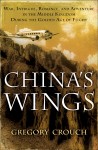
China's Wings coverPioneering the Hump route over the eastern spur of the Himalayas in late 1941 and 1942 certainly has to be considered the China National Aviation Corporation’s capstone achievement from its two decades of service in the Far East, and its myriad adventures on the Hump comprise one whole part of my book, China’s Wings.

Here are three photos of the Hump taken by CNAC pilot Jim Dalby, and one of a bunch of CNAC veterans at their 2002 reunion:

There are a lot of great Hump-related items on the internet I’ve stumbled across, and I thought I’d link to a few of them:

A great Flickr photostream of World War II: China-Burma-India theater related photos.

A WWII newsreel piece about flying the Hump on YouTube, and a modern video showing a DC-3/C-47 engine start.

Here’s a video of an old B-24 pilot describing some of his experiences on the hump. (I think he was probably flying a C-87, the cargo version of the B-24.)

This one shows a C-46 commando landing and taking off in the Northwest Territories.

Shifting to the written word, here’s an article about the Hump in Air Force magazine, and here’s a scan of the article Teddy White wrote about it in the September 11, 1944 issue of Life, which has some great pictures.

All of the record holders for number of Hump trips are CNAC pilots, and I was fortunate enough to interview the two guys who flew it the most while writing China’s Wings. On the left, that’s Dick Rossi, who set the record at 715 trips; on the right is Pete Goutiere, in second place with 680 trips.

Those are incredible numbers, especially considering that for much of the war, the Air Corps considered 100 Hump trips to be a full tour of duty.

China's Wings cover

Share

Photos of restored C-47/DC-3


China's WingsAbout two weeks ago, I posted about a C-47 that once flew the Hump for CNAC that has been restored to flying condition by the Historic Flight Foundation in Everett, Washington.

Shortly after I posted that story, I got an email from Liz Matzelle, a Historical Flight Foundation volunteer, filled with details about the airplane. Apparently, when it was with CNAC, it was a Lend-Lease C-47 that rolled off the Douglas assembly line in Long Beach and flew as CNAC #100, and then after the war was renumbered as XT-20. CNAC #100 doesn’t feature in any of the stories I related in China’s Wings, but it was there flying alongside the other airplanes I did mention, and being flown by the people in the book. So far, I haven’t seen it in any of the wartime photo collections I’ve perused, but since there are more pictures of airplanes in the old CNAC pilots’ collections than there are of women (by far), I wouldn’t be surprised if there are a few photos of #100 I just haven’t noticed yet.

Liz was kind enough to include some photos of their restoration in her email (and grant me permission to post them). They’re in the gallery below, and I must say, it’s great to have the old bird back in the air.

Isn’t she gorgeous?

* UPDATE! Scroll down and read the comment posted by Pennie Rand. Apparently, her father, ex-CNAC pilot Foster McEdward, flew this exact airplane, both when it was with CNAC, and in the 1950s, when it was a corporate plane.

Here’s a six-month old post featuring Foster McEdward, with two excellent photos.

China's Wings

Share

More thoughts on David Oliver Relin’s tragic suicide


Building on yesterday’s post about David Relin’s suicide. The event haunts me.

First off, let me do what I should have done first off yesterday, in my initial flush of shock and surprise, which is offer my condolences to his friends and family for their great loss. For that omission, I am deeply sorry. What an unmitigated nightmare this episode must be for them.

Looking at news accounts this morning, like this one in The Los Angeles Times, it appears that Relin died more than two weeks ago. (Interestingly, someone named “wilde75oscar” appended a comment to the bottom of the LA Times story at 9:55 am, a handle I find remarkably similar to the one used by “Oscar Wilde” to comment on my yesterday’s post at 4:06 a.m. this morning.)

This tragedy haunts me because I know how vulnerable I am in my work to a nightmare unfolding similar to the one that plagued Relin. As a friend posted on the FB link to my post, “To have a book be as successful and admired as Three Cups of Tea, then discover, later, that you have been profoundly deceived and that said book is full of lies would be an emotional roller-coaster ride that would be hard for anyone to take.”

Joseph Conrad

I’m pretty sure I would find it unendurable.

Lord Jim comes instantly to mind.

And after making yesterday’s post, I noticed that December 3 was the 155th anniversary of Joseph Conrad’s birth.


Share

This news causes me intense pain…


I just saw the news about David Oliver Relin’s suicide, and it causes me intense pain, because I feel like I viscerally understand how this tragedy happened.

For those of you who might not know Relin’s name, he’s the co-author of Three Cups of Tea, the story about Greg Mortenson and the Central Asia Institute (CAI).

I was outrageously angry and frustrated with myself when Three Cups of Tea was topping every best-seller list on earth — I’d known about CAI and Mortenson for years and never had the idea to write a book about it.

And after Jon Krakauer’s Byliner expose brought to light the dark side of Mortenson’s feel-good story, I was awash with relief that it hadn’t occurred to me.

Relin got that inspiration, and it seems to have cost him his life.

As a writer on the lookout for a “high-concept” story, I could easily have fallen under Mortenson’s spell, and if in our interviews I was having my head filled with mis-remembrances, not-quite-the-truths, distortions, disinformations, evasions, inaccuracies, inventions, misrepresentations, prevarications, misstatements, and other whoppers, big and small, I might not have had the brains — or the courage — to smoke them out, either.

That thought fills me with terror, because there but for the grace of God goes me.

David Oliver Relin’s blood is on someone’s hands, I think I know whose, and it fills me with bitterness.

So many people have been hurt by this, and such an incredible opportunity has been squandered.

And to be 100% clear, I don’t think that person is Jon Krakauer.

I’m grateful to the CNAC veterans for being truthful in the interviews which were crucial to the writing of China’s Wings. In so many ways, I was at their mercy.

*In a related note, many of my CNAC veterans can remember in minute-by-minute detail significant events that happened to them in the 1930s and ’40s. Here are two that describe what it was like to interview Moon Chin, one of China’s Wings main supporting characters (and an incredibly reliable witness): Ceiling 500 feet, Intermittent Drizzle; and Why interviewing Moon Chin is like interviewing a jazz riff.

*Here’s a link to The New York Times story about Relin’s suicide.

* Here are a few more thoughts I’ve added about this tragedy.

Share

The official winery of China’s Wings in the USA Today!


In a post I made some months ago, I made Cartograph Wines, run by my dear friends Serena Lourie and Alan Baker, the official winery of China’s Wings.

Well, in exciting and breaking news, here are Serena, Alan, and Cartograph featured in a USA Today article about small businesses using technology to gain a competitive edge.

The story includes a nice video of Laura Petrecca explaining how Serena and Alan are using social media and technology to connect with their customers and promote Cartograph.

And here’s a photo I love of Serena, Alan, and me hamming it up at their tasting room, Garagiste Healdsburg, this past April.

With Serena and Alan and a bottle of Cartograph in April 2012

They make excellent wines — try some for Christmas!

Share

A C-47 that once flew the Hump for CNAC is back in the air!


Exciting stuff! The folks at the Historic Flight Foundation in Everett, Washington, have restored to flying condition a C-47 that once flew the Hump for CNAC, the China National Aviation Corporation.

The airplane began service flying the Hump for CNAC as a C-47 in 1944. It briefly passed through Claire Chennault’s hands in the late 1940s before making it’s way stateside, to Pan American Airways, in 1949. It flew in Pan Am livery as a DC-3 for several years before entering service as an executive transport plane. The Historic Flight Foundation restored in to its full former glory in its Pan Am heyday.

I wished they’d have decided to do it up in CNAC regalia, since it’s probably the only plane that flew for CNAC that’s currently in flying condition, but it’s great to have it back in the air regardless.

If the Historic Flight Foundation can help me match this plane’s registration numbers to its CNAC fleet number, I might be able to match it to some stories that happened in that very airplane. And I’m sure I’ll know some guys who flew it.

Here’s the article about the restoration in Flying magazine.

It’s worth clicking on the Historic Flight Foundation’s website to hear the engine growl they have playing as intro music.

Share

I recommend the Michigan War Studies Review


If you’re interested in military history, I strongly suggest perusing the Michigan War Studies Review, an online scholarly journal affiliated with the Michigan War Studies Group dedicated to reviewing books that treat with military history.

The War Studies Review has 7 years worth of book reviews posted, and they’re superb. Note, they’re book reviews, by subject matter experts, not book summaries, as is most published stuff that tries to pass itself off as reviews online and in print. I’ve sampled quite a number of the reviews, and where they intersect subjects and/or books I’m familiar with, I generally find myself in agreement with their analysis, as in this review of Frank McLynn’s The Burma Campaign: Disaster into Triumph, 1942-1945, or thinking, “Hmmm, maybe I should have considered that…”

Michigan War Studies Group

I had the opportunity to make a China’s Wings presentation to the War Studies Group three weeks ago, which sparked a really rewarding discussion with 12-15 history professors (loosely) affiliated with the University of Michigan. My only regret is that we didn’t have more time. Happily, James Holoka, editor of the War Studies Review, found a subject matter expert willing to review China’s Wings. I’m really looking forward to the criticism.

On the War Studies Group website, I recommend their “Internet Resources” page, which has a long list of links to useful and interesting military-history related websites.

Share

How I organize my non-fiction research


A non-fiction book project generates a colossal volume of information. Keeping it organized is crucial. Here’s a look at how I do it, and an overview of how I’m hoping to use Evernote to do it digitally.

Today, I’m building on yesterday’s post lauding the utility of Evernote. The drawing posted below shows how I’m using Evernote notebooks to organize the various stories I’m researching in the hopes of expanding each one into a book proposal.

The line of boxes down the left side are the different Evernote notebooks I’ve established to hold relevant information.

Proj # 1, 2, and 3 are my three story ideas, and each one set up as a notebook. And since Evernote allows you to nest notebooks inside of other notebooks, in each of the three, I’ve nested the six notebooks I’ve shown growing out of Proj #2. I store the relevant “notes” inside of each one of those six sub-notebooks.

(And since Evernote allows us to attach “tags” to each note, I’m using the tag feature to identify source notes relevant to each story scene. You can attach any number of different tags to a note, which is great if a certain factoid pertains to more than one scene.)

In the notebook “Organizational Stuff”, I’ve created notes for each of the following: bibliography, characters, people to thank, questions, quotes, timelines, and vocabulary.

For everybody who has asked me how I remembered who helped me during the eight years it took to write China’s Wings, here is your answer — I kept a list of names in a Word file. And even then I made one crucial mistake, forgetting to add Tom Lambert and Theresa Ho. An omission that haunts me.)

“Characters” is a list of the names I encounter in my reading. Not all of whom will make it into the final book — indeed, most of them won’t — but my comprehensive list of names helps me recognize relationships between people in the milieu about which I’m writing.

“Questions” are questions I need to answer. “What is an aileron horn?”  for example. “What changed in 1944/1945 that made  Bond want to get Pan Am’s investment out of China?” for another.

“Quotes” holds quotes from other writers or speakers relevant to the topic that I find amusing, helpful, or are things I might want to use as front pieces for chapters or parts of the book.

“Timeline” is a list, in order, of what happened when. Which I find key to answering the absolutely crucial and central question of narrative non-fiction: “What happened?”

“Vocabulary” is where I store definitions and descriptions pertinent to each story’s milieu.

This builds on the Practicing History and Some of My Best Friends posts I made last January, and on June’s How the Sausage Got Made, which describe and illustrate the decidedly low-tech organizational technique I used for China’s Wings.  Indeed, I’m thinking Evernote’s notebooks and notes are going to largely replace the 4×6 cards I used for China’s Wings.

This is what the final pile of China’s Wings research looked like. I’m thinking Evernote might replace a significant portion of that — and make it a hell of a lot more portable, which means that for my next project I’ll be less trapped in my office than I was while writing China’s Wings.

If you have questions, suggestions, or organizational systems of your own you’d like to share, please post comments.

My system is far from perfect, I’m always trying to learn and improve how I manage my information, and I’d greatly appreciate thoughts, ideas, and suggestions.

Share