I get that I’m the most spectacularly unhip person on earth, so everybody else has probably been turned into this for years, if not decades, but what about Rachel Price of Lake Street Dive?
New (pseudo) celebrity crush for me.
Mother of God, what a voice–shivers down my spine, wet eyes, and all that. They’ve got a 12-song EP called Fun Machine that’s available for download for $9.99. Worth every penny, in my mind.
Thanks to YouTube, the couch, the iPhone, and The Wall Street Journal, of all strange combinations. Here are a few songs:
The best sound strikes me as the recordings they did at WFUV. Go to YouTube and search for “Lake Street Dive WFUV” brings up the whole list. Love the sexy nerd look she’s sporting in those recordings, too. Looks like she just put aside a book.
Here are 10 items that piqued my interest this week:
1. Carly Rae Jepson’s first pitch at a baseball game. According to the commentary, this is NOT the worst first pitch of all-time, but what I really want to know is did the umpire call it a strike?
4. “Top 10 Worst Humans of All Time,” which I saw through yahoo. Thought provoking, but I don’t think they’ve made good choices. Himmler instead of Hitler? Jim Jones and Jeffrey Dahmer? Scumbags, yes, but I wouldn’t think they’re in the all-time conversation. No Mao, Stalin, or Tojo? No leaders of the Mongol horde? No leaders of the Inquisition?
5. On the subject of bad human beings, I’ve been following the Bo Xilai events since the story broke. Here’s the latest BBC report on his trial: “Bo Xilai rejects “insane” wife Gu Kailai’s testimony.” Bo was once rumored to be under consideration for one of China’s Top 7 jobs. Until his wife poisoned a British businessman, that is.
Stephan Siegrist on the West Face of Cerro Torre in 1999
Back in the Patagonian winter of 1999, I made the first winter ascent of Cerro Torre’s West Face with Thomi Ulrich, David Fasel, and Stephan Siegrist. Well, this morning, I’m thrilled to see the news posted at Planet Mountain that Stephan has done it AGAIN, this time in company with Dani Arnold, Thomas Huber, and Matias Villavicencio.
I’m amazed that nobody has repeated Cerro Torre’s West Face in winter in the last 14 years. Since the demise of the Compressor Route, it sounds like the only way to have a reasonable chance of getting that all-world classic route to yourself is to do it in winter. And that climb doesn’t want company–with just the people with whom you’re sharing the rope is how it should be for full value on Cerro Torre’s West Face.
It’s worth clicking on the PlanetMountain image below and perusing their photos–they’re spectacular.
But then again, as I’ve always said, taking pictures of Patagonia is a lot like taking pictures of Sophia Loren–even when she looks bad, she still looks pretty good.
My account of our 1999 winter ascent of Cerro Torre’s West Face is the “On the Side of Hope” chapter of my book, Enduring Patagonia.
Regular readers of this site will remember that two months ago I posted a review of Steph Davis’s remarkable book,Learning to Fly. In it, amidst a description of the wild concatenation of adventures that rock Steph’s life during the book, I mentioned that she fell in love.
It breaks my heart to write it, but Steph has lost that love. Her husband, legendary skydiver and BASE jumper Mario Richard, died last weekend in a BASE jumping accident in Italy. I never had the opportunity to meet Mario, but Steph paints a wonderful and sensitive portrait of him in her book. He’s memorialized in a John Branch article that’s in today’s New York Times: “Mario Richard, BASE jumper and Sky Diver, Dies at 47.”
My thoughts and condolences go out to Mario’s family and friends, and especially to Steph.
As the “Shanghai Incident” flared into the Battle of Shanghai and full-scale war in the middle of August, 1937, the suddenly widened war exposed the fault lines in the airline’s Chinese-American partnership.
Harold Bixby
The Chinese government pressured Harold Bixby to get the Americans flying again, for CNAC’s four DC-2s were the best transport planes in Asia, and only the airline’s American pilots were checked out to fly them. Bixby stalled CNAC Managing Director Colonel Lam long enough to secure the unpaid July bonuses due to the DC-2 pilots and the American salaries for August.
Most foreigners living in Shanghai felt the “Bloody Saturday” bombings on August 14 had been a Chinese conspiracy to tangle the foreign powers into an anti-Japanese war.
Driven by the isolationist desires of its population, the United States government was determined not to let that happen. A quote from U.S. Senator Borah (R), former chairman of the Senate’s foreign relations committee, in the South China Morning Post summarized American policy: “Whatever course we pursue should have the objective of keeping out of conflict or controversy.”
In Shanghai on August 21, Bixby received a formal summons from American Consul Clarence Gauss and Chief Justice of the American Court for China Milton Helmick. Gauss warned Bixby that having CNAC’s American personnel fly what were essentially military support mission was a violation of American neutrality laws. Helmick threatened prosecution.
“We’re under a lot of pressure to let the pilots fly,” said Bixby. “China needs their services.”
“The law, Section 4090, Revised Statutes of the United States, if you must know,” said Judge Helmick, “forbids US citizens from joining the armed forces of other nations. The U.S. Court for China has stated the position plainly. Americans are forbidden to take part. It’s as simple as that. The penalty is a $2,000 U.S. fine and two years imprisonment.”
“But we’ll have to withdraw entirely,” Bixby pleaded.
“And I would wholeheartedly approve of that,” said Judge Helmick. “The law will be strictly enforced. Neutrality violations will be prosecuted to the limit.”
“The position of the United States is quite clear,” Gauss added. “We’re going to stay out of it, regardless of where our personal sympathies lie.”
Bixby made one more attempt to secure assurances from Colonel Lam that the Americans wouldn’t be assigned to military support missions. He told Colonel Lam that if CNAC wanted to continue enjoying the services of its American personnel, they absolutely had to be kept apart from military operations. Colonel Lam’s very next flight request was for two DC-2s to fly to a small town north of Hankow and transport planeloads of pursuit pilots to Nanking.
It was hopeless. Bixby announced that all fifteen Americans were withdrawing from CNAC “to avoid embarrassing the neutrality efforts of the United States.
Ernie Allison went to Hong Kong on a French ship on August 22. Bixby and the airline’s other remaining Americans left Shanghai for Hong Kong aboard the S.S. President Pierce three days later.
The Chinese were apoplectic. They’d nurtured the airline as a crucial aspect of the nation’s modernization for eight years and their American “partners” had abandoned them at the exact hour of their greatest need. Bixby was equally bitter, he thought the Chinese might have been taking advantage of American neutrality legislation to force Pan American out of the partnership and seize the whole airline for themselves.
The Chinese felt like they’d been deserted; the Amerians felt they’d been robbed.
Bixby to Morgan, August 25, 1937, written aboard the S.S. President Pierce en route to Hong Kong, the Bond Papers; Farmer, Rhodes, Shanghai Harvest, pp. 49; Senator Borsch quote: South China Morning Post, August 16, 1937; “C.N.A.C. Pilots Discontinue Services for Duration of War,” China Weekly Review, August 28, 1937; Bixby to Mr. Peng Sho-poi (sic), Chairman of the Board of the China National Aviation Corporation, September 13, 1937, the Bond Papers; New York Times, August 22, 1937; clipping from the Manila Bulletin, August 23, 1937, provided to the author via by Nancy Allison Wright; Florence Allison diary, September 1, 1937, text provided to the author by Nancy Allison Wright; author’s interview with Moon Chin on April 19, 2006.
I’ve been reading history for 40 years, and in that time, I’ve read dozens, if not hundreds, of battle narratives. Of them all, this is the best–Shattered Sword: The Untold Story of the Battle of Midway, by Jonathan Parshall and Anthony Tully.
June 4, 1942 is the best and most important day in the history of the United States Navy. Conversely, for the Imperial Japanese Navy, it’s the worst. In the space of that one single day–actually, within about five critical minutes–they lost the offensive core of the best, most powerful, hardest-hitting fleet the world had ever seen.
How that happened–from the Japanese perspective–is the story of Shattered Sword.
Using Japanese sources that haven’t colored previous English-language histories, Parshall and Tully reconstruct the battle from the star chambers, bridges, flight decks, cockpits, and engine rooms of the Imperial Japanese Navy, debunking many myths that have crept into the common American version of the the battle.
Parshall and Tully pick up the threads at the beginning of planning for the Midway operation, and guided by their extraordinary research, it’s fascinating to watch the disaster unfold from the vantage of the Japanese fleet, until on the fateful morning, constant, albeit piecemeal, American attacks harry the Japanese carrier task force. The early American efforts score not a single hit, but forced to deal with them one-by-one, the Japanese lose the ability to dictate the tempo of events. They could only react, and they were back on their heels when, at 1022, the first American dive bombers tipped over to deliver the crushing blows. By 1026–a mere 4 minutes later–when Lt. George Best planted a 1,000 pound bomb directly amidships on the Akagi, pride of the Imperial Japanese Navy, three Japanese aircraft carriers were doomed. Later that afternoon, a fourth met its end.
Parshall and Tully describe flaws in the Japanese strategic and operational concepts, the egregious methodology of their wargaming and contingency planning, how their military philosophies caused potentially lethal flaws to be engineered into their aircraft carrier design, and a host of other operational and tactical shortcomings that culminated in their aircraft carrier battle group being on the receiving end of the single most decisive airstrike in naval history.
Shattered Sword is exceptionally convincing history, and it’s absolutely fascinating. I couldn’t recommend it more strongly.
Ever wonder what environmental calamity looks like from space? This New York Times article gives the answer, “Gorgeous glimpses of calamity,” it’s both beautiful and terrifying, and it concerns every one of us on this planet, the only one we have.
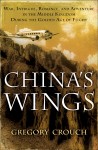
A NASA image from the article, which shows the Brahmaputra River and the Assam Valley quite clearly, the upper right hand finger of smoke, which featured so prominently as the western terminus of the Hump Airlift in China’s Wings.
Thanks to Bud Shaw and Susan Savory for bringing the article to my attention.
Not quite science, but architecture, check out “The smallest house in Italy,” a mere 75 square feet, in Rome.
And not quite architecture, but a pretty neat backyard DIY project, check out this “Pallet swing bed,” on theMerrythought.com, which looks pretty easy to knock together.
From NPR News, “the NY Post axes the guy who penned the classic “HEADLESS BODY IN TOPLESS BAR” headline, considered the best American tabloid headline of all time. Personally, I’ve always been inclined toward “HITLER ALIVE ON DARK SIDE OF MOON; SECRET NAZI BASE DISCOVERED,” which nearly put me on the floor of the supermarket checkout line twenty years ago.
Structuring his book with nine chapters to mirror the gradations of the Bortle Dark-Sky Scale, Bogard takes us on a worst-to-best tour of the North American and European night, starting (where else?) in Las Vegas, in the glare of the forty-billion candlepower lightbeam cast skyward from the apex of the Luxor Casino, and in New York City’s Times Square, a place so bright it utterly obliterates the stars. From those over-illuminated start points, Bogard leads us through a usually charming, occasionally appalling series of Bortle-scale based literary, physical, ecological, and health-inspired peregrinations, ruminations, and digressions as he wanders the night skies of London, Paris, Florence, Walden Pond, Cape Cod, his Minnesota roots, the southwestern deserts and the Grand Canyon, the Channel Island of Sark, Acadia National Park, the Canary Islands, Death Valley, and the Black Rock Desert. Along the way, he encounters a plethora of dark sky aficionados and activists, finally bringing us to a starry climax at an astronomy festival in Great Basin National Park, beneath one of the darkest night skies in the United States.
The End of Night is a fascinating read, built around a topic most of us never pause to consider – the beauty of the night – and tragically, considering the state of modern light pollution, never or seldom get to experience. Bogard quickly sensitizes readers to the perils and evils of artificial light and light pollution, and he makes a strong science-based case that darkness is actually good for us—as in good for our health–since thousands of generations of evolution adapted us to spend half our lives in darkness. Through the eons of human history, every member of our species experienced the profound, three-dimensional glitter of the stars. That isn’t true anymore. We didn’t start losing the night until just over 140 years ago, when, on April 29, 1869, Cleveland, Ohio installed the first electric streetlamp. Until then, true darkness held the night skies of even the most urban places. Ever since, the developed and industrialized world has been gradually losing the night.
And we lose another precious glimmer every night.
I was in the Army from 1984-1992, and I remember a soldier who’d grown up in an inner-city tilting his head back during an all-night maneuver and saying in a wonder-tinged voice, “Sir, I just can’t get over all these Goddamned stars.”
He’d had no idea there were so many until the Army made him do night maneuvers.
As for me, I first saw the Southern Cross from a hasty fighting position I’d dug just before sunset during one of the first days of Operation Just Cause, the invasion of Panama, and in my subsequent wanderings I’ve been fortunate to experience some truly amazing nights. I’ve contemplated the Milky Way’s wild celestial ribbon dancing over the sand dunes of Arabia’s Empty Quarter, gazed on the Magellenic clouds from the dark winter fastness of the southern Patagonian ice cap, and stood in speechless awe beneath the starry infinity that rides over Bolivia’s Uyuni desert, treasured memories all, ones that engender emotions every human should experience, but thirty pages into Bogard’s book I stepped outside to assess the quality of the night from my backyard in Walnut Creek, California.
Predictably, it’s not good.
A streetlight casts ugly yellow glare into the best part of my property, the glow of lights from the suburb around me obscures all the faint stars, and the Milky Way shows but a hint of its glory. Bortle class 5 or 6, I’d hazard—“suburban sky” or “bright suburban sky.”
I wish it were darker.
So does Bogard, and in The End of Night he dispenses much advice on what we might do to improve the quality of our nights.
By way of fabulous coincidence, last Friday, when I was into the final chapters of Bogard’s book, my twelve-year old son Ryan and I were in Yosemite, and we attended an excellent night skies presentation by astronomer, author, artist, and self-styled night sky ambassador Tyler Nordgren. Bogard quotes Nordgren several times in his book, and one of Nordgren’s beautiful WPA-styled night skies posters graces The End of Night’s cover.
Inspired, Ryan and I spent the next night sprawled in our sleeping bags among the sagebrush at the mouth of Lee Vining Canyon, between the eastern gate of Tuolumne Meadows and Mono lake, and it was a wonder to have my son snuggled against me while we watched the slowly pinwheeling stars and the occasional bright streaks of the Perseid meteor shower.
We need to learn to love darkness. It’s part of who we are.
Back to the Battle of Shanghai, another China’s Wings outtake, and the story of how Moon Chin’s wife very nearly didn’t escape the city… This one picks up from the end of “One DC-2 gets wrecked & Moon Chin saves another” I posted on Tuesday:
Considering the rudimentary communications of China and the colossal battle breaking loose in Shanghai’s northern districts, Moon Chin hadn’t been able to communicate with his wife, Elsie, who was still trapped in Shanghai. On her own initiative, Elsie Chin decided to flee the city. She shoved her way to the Shanghai-Nanking railway at a station west of Chapei. It was jammed with terrified civilians. A train began pushing out from the platform. Somebody said it’d be the last one, and it was absolutely crammed full. Its rooftops were just as packed as the carriage interiors. Elsie dropped her bag and rushed it, grabbing at the door of one of the last cars, but even the stairs into the carriage were full. She clung on outside the door. Only her toes held the edge of the bottom step, and the train picked up speed. Time and again the crowd in the carriage above Elsie surged and shoved and recoiled down the stairs. Each time the crush of people pushed against her and she fought to hold on, but her grip weakened. She’d be injured or killed if she fell. The crowd pressed her again, and her grip failed.
Just as she lost her grip on the speeding train, an anonymous arm reached through an open window and hauled her inside to safety.
Moon and Elsie Chin
Elsie looked for Moon Chin at the Nanking airport. He wasn’t there. The last that CNAC’s Nanking staff had heard, Moon Chin was in Hankow. CNAC flew her upriver, but Moon wasn’t in Hankow, either. He’d already gone to Chungking and Chengtu, even further westward. The operations staff passed radio messages between them. They finally met in Chengtu, the city they’d left only a month before, and enjoyed a composed airfield reunion, Chinese fashion, without emotional display. Moon Chin went back to maintaining his old route, Chengtu to Chungking in a Stinson Detroiter, just as he’d done before the outbreak of war.
One of CNAC’s Stinson Detroiters
The families of the airline’s other Chinese and Chinese-American staff members suffered similar adventures escaping Shanghai. Behind them, the fighting continued to escalate.
* * *
Elsie Chin’s escape from Shanghai: Author’s interviews with Moon Chin, April 19, 2006.

 I get that I’m the most spectacularly unhip person on earth, so everybody else has probably been turned into this for years, if not decades, but what about Rachel Price of Lake Street Dive?