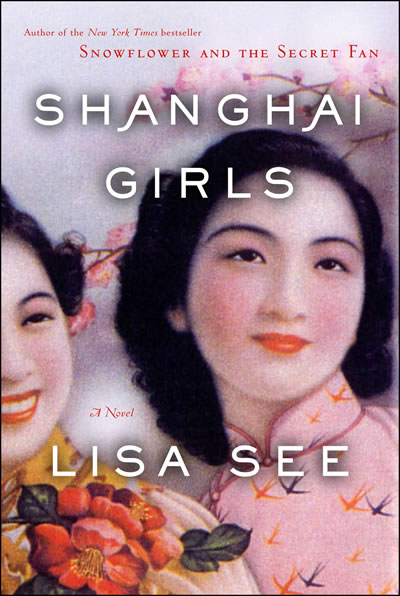
Lisa See, Shanghai Girls, and China’s Wings


I finished Lisa See’s Shanghai Girls on a Houston-bound airplane last week. I greatly enjoyed the novel, and I got a huge kick out of her treatment of the two “Bloody Saturday” bombings in Shanghai on August 14, 1937 (which killed 1,740 civilians, most of them Chinese refugees). Reading her account of the bombs that fell between the Cathay and the Palace Hotels where Nanking Road meets the Bund (pages 50-54 of Shanghai Girls), I was certain we’d read the same sources, and sure enough, in her acknowledgments section, she mentions Hallett Abend, the New York Times  correspondent who covered the bombing, along with Stella Dong and Harriet Sergeant, both authors of books on Shanghai. (Stella Dong, Shanghai: The Rise and Fall of a Decadent City, 1842-1949 and Harriet Sergeant, Shanghai).

The Bloody Saturday bombings are on pages 96 and 97 of China’s Wings, and Hallett Abend is the author of the two New York Times articles I cited in my endnotes (along with nods to Walter “Foxy” Kent, a CNAC pilot who wrote an article for The Atlantic that describes the bombing, Percy Finch, Rhodes Farmer, Florence Allison’s diary, and several contemporary photos). Ms. See and I latched onto some of the same details — the silence after the bombing and the slow return to life, the tinkle of glass falling to the sidewalk from the hotel windows, the shattered body part, and unimaginable carnage… if Ms. See has made any historical error, I think it’s in the amount of time that she has pass between the Nanking Road bombing and the bombs that hit The Great World Amusement Building at the corner of Edward the VII Avenue and Tibet Road. She has Pearl, her heroine, hear the second bombing “a minute or two later.” I think closer to 15 minutes passed between the two events.

But that’s a minor quibble, and in no way undermines the essential truth of how she described the event in her novel — which I wholeheartedly recommend.

Share

Scenes from a Shanghai refugee camp, by Schiff, December 1937


Last week, reading and taking notes for a story about the Battle of Shanghai at the UC Berkeley library, I was struck by these sketches of a Chinese refugee camp, the camp school, Chinese nurses in a hospital, and a Chinese woman working in support of the war effort, all drawn by Schiff, the renowned Shanghai cartoonist, that appeared in the China Weekly Review toward the end of 1937. Enjoy.

Share

Old photograph fever sweeps China


“Old photograph fever” is currently sweeping China as people try and recapture a visual sense of their own history.

Apparently, the Communist party frowned on China’s history as “black time,” particularly during the Cultural Revolution, and its scourging of past associations caused most Chinese to purge their family photographs. Official historical archives were also destroyed, along with their photos. As a consequence, there are almost no photographs of China — in China — prior to 1970.

A website comment this morning brought this BBC link about the story to my attention. It’s worthy of its own post. The accompanying slide show is absolutely gorgeous.

For any old-photos-of-China enthusiasts who’ve stumbled across my website, I’ve established a “photos of old China” category.

Hope you like what you find. Please do post comments if you discover any personal connections to any of the photos I’ve posted.

I’ve also posted China images on my China’s Wings Pinterest board and in a photo album on my China’s Wings Facebook page.

I’d be thrilled if China’s Wings could catch a draft from China’s new passion for its fascinating past.

CNAC Forever!

Share

China’s Wings reviewed by Noozhawk


China’s Wings received an excellent review from Tom Cahill in Noozhawk, Santa Barbara’s online newspaper.

The article includes a picture of me signing a copy of China’s Wings for Dolores Pollock, my mother’s longtime boss at Marymount School — who you’ll find thanked in the book’s acknowledments. My greatest regret on the whole project is that mom never got to see the finished product.

Share

Foster McEdward and China’s Wings


CNAC pilot Foster McEdward

Foster McEdward flew DC-3s, DC-4s, and C-46s over the Hump with the Army Air Corps from June, 1943 to January, 1945, flew with CNAC from mid-1946 to 1948, and with CATC in 1948 and ’49. He lives in Middlebury, Vermont, he’s currently 90-years old, and his daughter, Pennie McEdward-Rand, hooked him up with a copy of China’s Wings. Her recent email said that her father, “thoroughly enjoyed” the book, and that he “could recall all the names and places you mentioned in the book.  It was a treat for him to read this at the end of his life.  He said that of all the books written about the airlift, yours is by far the most well documented and most interesting.”

That’s high praise indeed, and I’m grateful to Pennie for sending along the good news. She also included these two excellent photos of Foster at his home in Vermont. One of his friends made the painting more than 20 years ago.

Foster with his granddaughter, Annavitte
Share

On the Santa Barbara Writer’s Conference Non-Fiction Panel with Brian Fagan and Kathleen Sharp


A few Sundays ago, I participated on the non-fiction book panel at the Santa Barbara Writer’s Conference with Brian Fagan (Elixir, 2011) and Kathleen Sharp (Blood Feud, 2011), and the Conference posted a video of our discussion. I enjoyed this more than I expected, and if you’ve got some spare time and an interest in how non-fiction books get written, you might, too. My only regret was not having a more expansive opportunity to talk with Brian and Kathleen afterwards, both of whom I found fascinating.

Both are widely published authors, and I’m really looking forward to reading their books.

Share

China’s Wings – how the sausage got made


I built most of China’s Wings from these 4×6 cards, using the process described by Barbara Tuchman in her book Practicing History (which I described in this old post).

I’d loaned one of my boxes of index cards to another writer, and they came back to me this morning. Feels good to have them home.

The box of cards, returned home. (The blue stripes mark cards whose factoids found their way into my original draft.)
Some of the cards pertinent to China’s Wings, 1939
Share